For those of you who would prefer to listen:
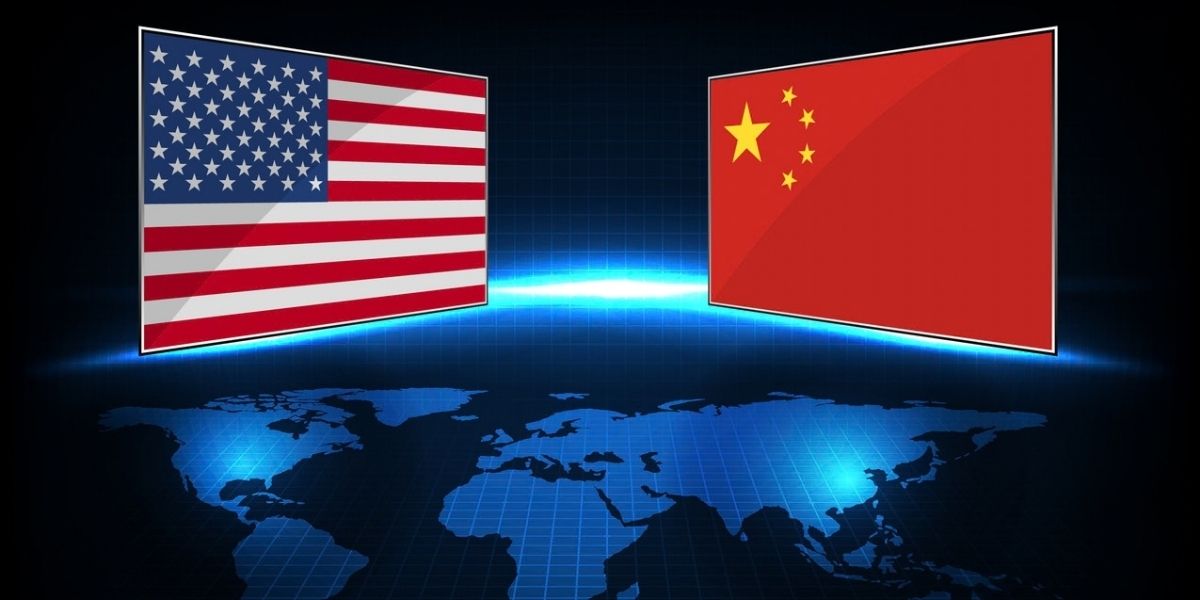
There was a summit in Washington this week. It was between Presidents Xi and Trump. You probably heard about it. It was President Xi’s first trip to the U.S. in over a decade. Interestingly, he skipped the annual UN General Assembly in New York earlier in the week. His Vice President attended in his stead. The official reason was that the Chinese President was prioritizing the bilateral meeting with the American President. The red carpet was rolled out to him at the White House.
At the top of the agenda were trade relations and the creation of an AI dialogue to discuss risks posed by the innovative technology. Iran and Russia were on the agenda too. Nothing came of those items, in terms of solutions. There are no quick and easy solutions to either it appears. President Trump continues to indicate a deal with Iran is likely after the midterms. Every deal and talk of a deal keeps getting pushed out.
Earlier in the week, Treasury Secretary Scott Bessent said the countries had agreed to extend their one-year trade truce, which was set to expire on November 10th, out to January. Bessent met with his Chinese counterpart and staff over the weekend, ahead of the event. President Xi did raise the subject of Taiwan. He wants the United States to stop supplying military arms to Taipei and recognize China’s sovereignty over the island nation. The United States has long maintained a strategic ambiguity as it applies to Taiwan. However, President Trump created some waves back in May when he said American arms sales to Taiwan were a “good negotiating chip”. That suggested that he might be willing to cut back on American support for Taipei. There was no movement in either direction on the topic at the Summit.
The State Dinner was also full of pageantry, with 27 CEO’s from Corporate America present. Every Tech Titan was represented. Elon Musk and Jensen Huang were there. Tim Cook and Jeff Bezos were invited too. Notably absent was the Anthropic CEO. He has been sounding the alarm of late on the risks and dangers of AI. However, OpenAI’s Sam Altman was in attendance. Both companies are widely expected to IPO soon. In case you were wondering, there were no corporate leaders from China present at the dinner.
Expectations were quite low for this Summit. That was made clear from our sources from the get-go. There isn’t a lot of common ground right now between the economic powers. That said, both sides do desire some stability. It’s also good to talk and engage face to face. That’s far better than to not. There were no breakthroughs at the Summit. There were no breakdowns either. There was a whole lot of “pageantry” on display. The pageantry reflects China’s supremacy and global standing. Basically, the meeting alone was the outcome. The fact that it happened was what matters most. Makes sense. Both leaders seemed to have gotten what they wanted. This was definitely not a Market-moving event.
These are consequential times and China and the United States are the most consequential powers on Planet Earth. These are the two largest economic producers, which are both partners and competitors. China and the United States are definitely not allies. They often act as adversaries despite seemingly hollow rhetoric. Both nations are in a fierce race for AI, which will lead to dominance in this Digital Age. Is this a Cold War with episodes of heat or just plain cut-throat competition with so much at stake? Perhaps a better question is, what’s the difference?
“The decision we make in these areas today can promote peace and prosperity for decades and decades to come.” That was from President Trump and he’s right on that. But will they? President Xi asserted that both nations stand to gain in cooperation and stand to lose in confrontation. He’s likely not wrong. The Chinese President said to the American President: “I am ready to work with you to steer the giant ship of China-U.S. relations on a steady course toward the future.” Yes! Don’t we all want that? A steady course toward the future sounds really good right now. Then I’m reminded of the sage words from my favorite philosopher, Yogi Berra. “The future ain’t what it used to be”.
This relationship between these 21st-century superpowers is so complicated. We must not forget that China buys Oil from Russia and Iran. That is a direct violation of American sanctions. It also sends supplies to build drones that both nations are using against America and its allies. The White House has been reluctant to confront Beijing on this issue, seeking areas of alliance as both global powers are so intertwined economically. The conflict in Iran certainly complicates that situation. China buys nearly 90% of Iranian Oil exports. China seems content to stay out of it overtly while playing a material role covertly. This issue is not going away. It certainly won’t resolve itself.
The Market will continue to remain both hopeful and skeptical, and always volatile, around American-Chinese relations. Presidents Trump and Xi will meet again in November and December. One will be in Shenzhen, the other in Miami. Of course, the consequential midterms take place prior to both. The outcomes will definitely play a role.
While the Summit was not Market-moving, rising yields sure were. The 10-Year Treasury yield hit 5.23% this week. It was 4.64% just a month ago. It started the year at 4.18%. 10-Year Treasury yield is the benchmark for most every loan and is considered the risk-free rate. The 10-Year Treasury matters. It matters a lot. The 10-Year yield has risen 7 months in a row. It’s on track for the longest streak in 50 years. The price of money has gotten much more expensive.
But then there’s this: Despite the Fed artificially keeping rates near zero for a cumulative 7 years around the Financial Crisis and Covid, the 10-Year Treasury yield has averaged 5.5% since 1980. It’s still below that today. The 30-Year hit that 5.5% level this week though. It last saw that level in 2002. Both the 10-Year and the 5-Year Treasury yields are above 5%. That has not happened since 2007. Mortgage rates touched 7.5% with talks of a potential 9% in the works. So, the recency bias is palpable. It’s becoming cost-prohibitive for many transactions. But for you who bought a house in the 1970s or 80s, 5% is not the end of the world. It’s a sign that things continue to return to normal. That said, it’s hard to say that anything is “normal” these days.
This is an increasingly difficult trading environment. We investors keep experiencing sharp reversals across Stocks, Bonds, Oil, Gold and even the Dollar. It feels like Nolan Ryan continuously hurling 100-mile-an-hour fastballs under our chins. Of course I’m dating myself here. For those of you who don’t remember Nolan Ryan, look him up.
The Dollar has been super strong of late, driven primarily by these higher Treasury yields. The Market is sending a crystal-clear, unambiguous message that inflation is still a problem and the Fed needs to keep raising rates. The price of Oil has been the biggest driver there. The Stock Market is holding in remarkably well, all things considered. The S&P 500 hit a 20-day high this week and is within spitting distance of its all-time high. That’s a good thing. What’s not good is just 6% of the stocks in the index are at those highs. Leadership has been extremely narrow, driven by Energy and Tech. Taking it a step further, just 49.9% of S&P components are above their 200-day moving average. That means half the Market is in a downtrend.
America’s Economy keeps chugging along at a solid pace. The Global Purchasing Managers’ Index, which is a key measure of the economic health and direction of the manufacturing and services industries, came in much better than expected. The index recorded a 58.4 in September. That was the highest reading in 5 years, when the Economy started bouncing back from Covid. What’s more, new orders came in at the highest level since 2022. With business activity rising like that, a recession seems to be of minimal concern.
The Fed looks vindicated for the rate hike last week. It will likely continue. The case for more hikes just got stronger. Things sure have changed. At the start of this year, Fed funds futures put the likely terminal rate at about 3%. It’s now jumped to 4.75% by next year. The good news, the Economy is still on solid footing. In some areas, it’s even accelerating. The bad news: Not everyone is experiencing it and money has gotten more expensive, which it’s likely to continue. It’s a double whammy when the price of stuff is already sky high. A decline in Oil prices would sure go a long way to soothe the situation.
Things sure are complicated on Planet Earth. But hasn’t that always been the case? The key is to pay attention, learn from history, study behavior, develop a plan, have a strategy, control what’s controllable and try not to sweat the small stuff while anticipating the big stuff. That tends to lead to better outcomes. The future might not be what it used to be. But it seems pretty clear it’s going to be what it’s going to be. Or something like that.
Have a nice weekend. We’ll be back, dark and early on Monday.
Mike