For those of you who would prefer to listen:
Inflation is still a problem. We see it every day. Gas prices jumped 9% in September. Wholesale inflation saw its second hottest month in 15 years. These higher prices have been sending Bond yields higher too. Stress is building up in the system. The Bond Market has been sending the signals. The Bond Market is the smartest of them all.
Energy prices remain elevated as Middle East tensions rise. The Energy ceasefire between Russia and Ukraine was never going to be a thing. Oil flows had been loosening up in the Persian Gulf. They slowed to a near halt this week. Our sources suggest this structural supply shock could last longer than the Market had been anticipating. West Texas Intermediate crude jumped back above $100. The price at the pumps around the country is $4.33 per gallon. That’s the average. It’s $6.22 here in California. Both are back near the highs on the year.
What’s driving the Bond Market movement? In addition to the higher Energy prices, there’s increasing pushback on data center build outs and questions about the sustainability of the growth rate for Artificial Intelligence. The AI trade hit a wall. The Market is starting to question if Tech is over building. Demand had been consistently outstripping supply for years now. That alone drives up prices. But what happens if and when demand slows? There’s a tremendous amount of debt piled up which has fueled the AI infrastructure.
Not all debt issuance has been investment grade. Much has been more speculative. High-Yield Bond spreads jumped 62 basis points (0.62%) in just over a month. That’s the amount over comparable Treasuries, representing the risk-free trade. Currently sitting at 3.25% above Treasuries, it’s still a tight relationship. In our work, investors are still not being compensated for taking the additional risk. Remember, High-Yield is Wall Street’s marketing term for Junk.
That risk-free rate is now above 5%. That’s a psychological level that has historically attracted income investors. The 10-Year Treasury auction this week was a smashing success. Yields had been running in advance. The 5.3% yield found buyers. The auction was very well-received. In fact, it could be described as a Buyer Frenzy. It sent yields back down towards 5%. The reversal in yields is a cautionary signal. It’s indicative that things are slowing. Realistically, it’s only been a matter of time. High prices have pained consumers. The high cost of capital has pained borrowers. The best solution for high prices is high prices. It tends to crush demand. That’s what’s going on now.
The Fed meets again next week. Will the central bank hike while growth is slowing? Will they do it a week before an election? A month ago, the Market considered it a coin flip. Today, the Market is assigning a probability of a hike at just 17%. This week, the fears of an AI slowdown overran the prospects of another rate hike. Tech stocks reflect that concern.
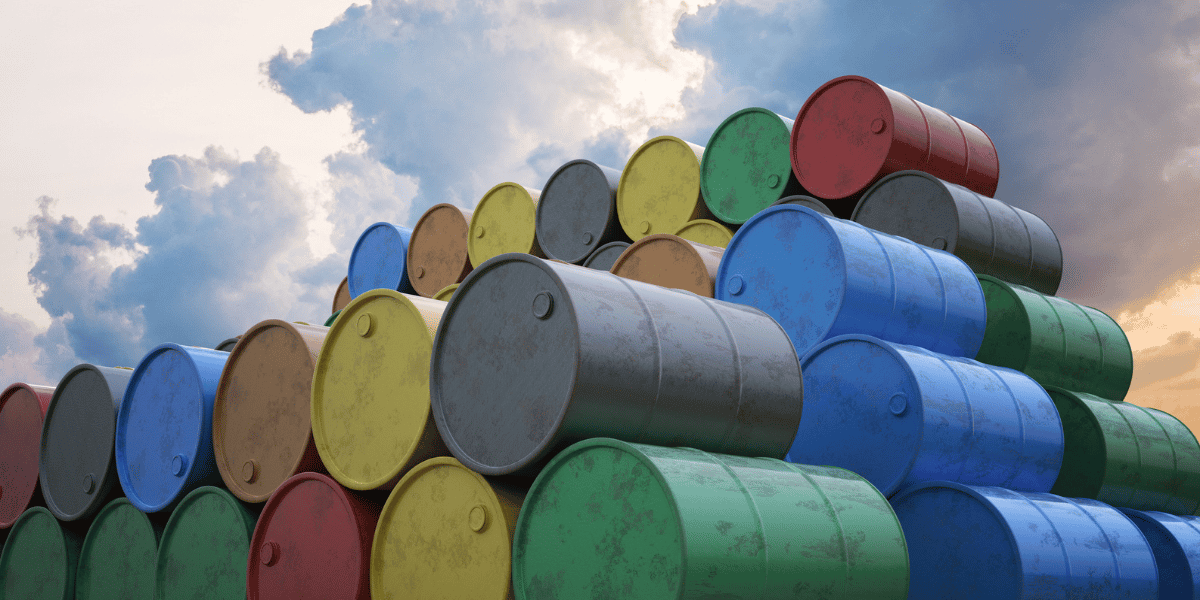
Inflation continues to be at the center of the issues ahead of the upcoming election. It has become so evident that despite all of the innovation and alternative sources of energy, the World still runs on crude. Ever wondered what’s in a barrel? Well, there are 42 gallons in a barrel of Oil. Half of it goes to gasoline. A quarter of it goes to Diesel and Heating Oil. 18% of the barrel is used to make a plethora of consumer products; More on that below. 10% goes to Jet Fuel and 3% makes asphalt. That’s the heavy, viscous stuff at the bottom of the barrel. It’s dirty business. But our roads rely on it.
So, what type of consumer products are made with that 18% of the barrel you might wonder? How about nearly everything. In addition to gas and plastics, petroleum is used for so many products that we use every single day. Oil is in toothpaste. It’s in shoes. It’s in your pants, your soap, your shaving cream, and shampoo. Oil makes boats, heart valves and hearing aids. It makes life jackets and aspirin. Oil is used to make fertilizer and credit cards. Those golf balls; Oil is in there. It’s also in paint and nail polish; Pillows and purses.
Maybelline and Vaseline; they’re derived from petroleum. Did you know that Maybelline was named after a pharmacist’s sister? She dabbed Vaseline and coal dust on her eyelashes for effect. She liked it. Her name was Mabel. Others liked it too. It was over a century ago. Her brother Thomas was an entrepreneur. He played around with her ingredients and started selling them. That’s how it started. The rest is history. Oil is used to make so many things. And it’s needed to transport them to the stores and to your homes. It’s no wonder prices have been soaring in our shopping carts. Oil drives the prices of the stuff we eat, the stuff we use, the packaging it’s stored in and the vehicles that deliver. Oil is everywhere.
101 Million barrels of Oil are produced daily around the globe. The United States produces 13.8 Million barrels per day. That’s an all-time high, making it the largest global producer. American Oil accounts for nearly 15% of the World’s total. Saudi Arabia is second with 10 Million barrels produced every day. Russia is 3rd, with just under 9 Million. It was 10+ Million before the war with Ukraine. Canada and China produce just under 5 Million barrels per day. Both Iraq and Iran produce roughly 2 Million barrels per day, half of what they generated before the conflict. Importantly, the State of Texas produces nearly 6 Million barrels per day alone. It’s by far the nation’s largest source today. You know, Black Gold; Texas Tea.
A big problem presently is the fact that the World consumes 102 Million barrels per day. We consume more than we produce. The United States is the largest consumer of Oil at 20 Million barrels per day. China is second at 16 Million. Basic supply/demand imbalances drive prices. Increased demand with reduced supply results in higher prices: Econ 101. We are living it every day. And supplies keep shrinking. Russian Oil has been sanctioned. In America, “Drill Baby Drill” was replaced by the ESG (Environmental Social and Governance) movement. Lenders were fed up losing money chasing speculation. Before the pandemic, investors and consumers sought more green solutions. Profitability and environmental issues drove Oil production down. The price of Oil went below zero for the first time ever. Who knew that could happen? That was during Covid. Demand bounced back much faster than supplies. That sent prices higher. Production increased in response. Renewables were the future. The system nearly broke. It’s true, Renewables are the future. They’re a big part of the present too. However, Renewable Energy is not the complete solution. This has been a stark reminder that, and I repeat, the World still runs on Crude.
It is believed it costs Russia somewhere around $40 to produce a barrel of Oil. Despite the sanctions, Russia still appears to be making huge profits on its sales. The key for Russia has been to maintain those buyers. Iran is more complicated. Its cost to produce Oil is roughly $10 per barrel. But it requires $120+ Oil to balance its budget. It’s a desperate time for the Iranian Economy. There have been shell games going on across the high seas. Both Russian and Iranian Oil have been transferred to other ships on the Mediterranean and off the coast of Africa to hide its origin and change its label. They’re called shadow fleets. This should come as no surprise. Oil & Gas revenue accounts for nearly half of Russia’s annual budget. For Iran, it’s close to 100%. Clearly, it matters. It matters a lot.
Back to the Market:
The price action has been rapid. The Tech-heavy NAS had its worst week in months. Semiconductors had their weakest stretch in two decades. Now that’s saying something. Rotation back into more defensive, dividend stocks was the move. Of course, the Chips have been the undisputed leader in the AI trade. But not this week. It was those Beautifully Boring Blue chips that caught a bid. That’s areas like Consumer Staples and Health Care. In fact, unlike previous weeks when Tech alone dominated the trade, there were more stocks in the S&P that went up than down this week. Despite the sell-off, the S&P is a mere 2.5% away from its all-time high. That makes the overall Stock Market volatility look fairly benign. It’s the activity below the surface that reflects a jagged line.
October is in full force. The price action reflects the season. Expect the volatility to continue as Earnings Season picks up. There’s also that election in a couple weeks. Keep those belts buckled. There’s going to be some more turbulence ahead.
Have a nice weekend. We’ll be back, dark and early on Monday.
Mike